


Picture this: a group of Hitler’s top generals, fresh from the battlefield after being captured, settling into a grand English country house like they’ve checked into the finest gentlemen’s club in London. Fine wine on the table. Billiards in the evening. Strolls through landscaped gardens. A visiting tailor to keep their uniforms sharp. Even the occasional trip into the city for lunch at Simpson’s on the Strand. They relax. They talk. They boast. And every single word is being captured by microphones hidden in the walls, the light fittings, the plant pots, the billiard table, and even the trees outside.
This was Trent Park, one of the sharpest intelligence operations of the Second World War. And gentlemen, it worked because the people running it understood something most of us forget: real power often comes from subtlety, not force.
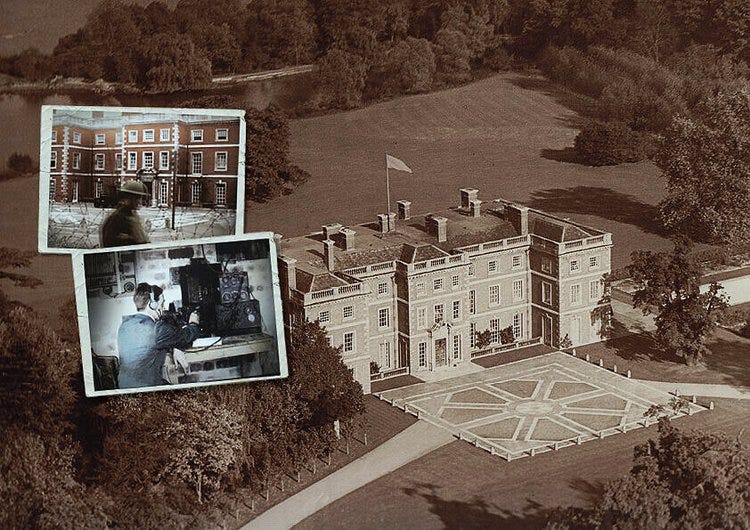
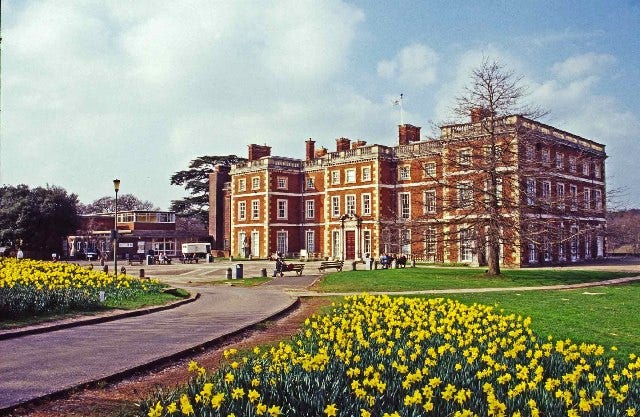
It was a sprawling estate in north London once owned by the flamboyant Sir Philip Sassoon. From 1942 onward it became home to dozens of high-ranking German officers - eventually around 59 generals and senior colonels. Two other houses, Latimer House and Wilton Park in Buckinghamshire, handled the lower ranks. Together, they formed the Combined Services Detailed Interrogation Centre, run by the brilliant Lieutenant Colonel Thomas Kendrick of MI19. Kendrick’s approach was pure psychological craftsmanship. Formal interrogations were kept light and deliberately weak. The real work happened afterwards, when the prisoners thought the pressure was off. Back in their comfortable rooms or wandering the grounds, they would discuss everything they had carefully avoided saying to the British officers. Battle plans. New weapons. Internal rivalries. And far darker truths.
To keep them talking, Kendrick built an atmosphere that flattered their egos.
Enter “Lord Aberfeldy.” He arrived as the ‘welfare officer’ – a one-legged Scottish aristocrat who claimed to be a distant cousin of King George VI. He showed the generals photographs of his supposed castle. He expressed a certain admiration for the Führer. Every fortnight he headed into London to buy them boot polish, extra cigarettes, chocolate, or a decent bottle of wine. He also took them for long walks, often pausing under a particular tree that just happened to contain a microphone.
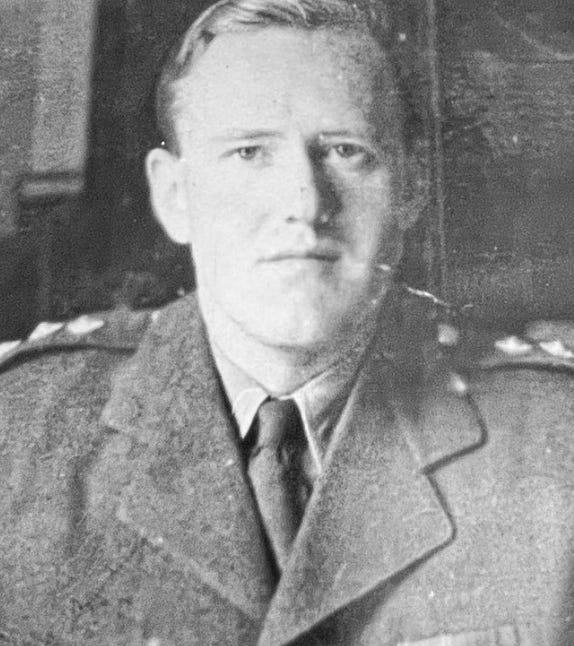
The German officers loved him. They confided in him. They never discovered that Lord Aberfeldy was actually Captain Ian Munro, a British intelligence officer playing the role of the eccentric aristocrat. One of them even remarked that their “involuntary hosts are thoroughly gentlemanlike.” That line says everything about how effective the illusion was.
While the officers played cards or debated strategy upstairs, teams of secret listeners sat in the basement rooms - three miked rooms staffed in six-man squads working long shifts. Most of these listeners were German-speaking Jewish refugees who had fled Nazi persecution and joined the British Army’s Pioneer Corps. They understood every dialect, every technical term, every casual slang. They recorded conversations onto discs, transcribed the useful parts, and fed the intelligence straight into the Allied war machine.
The haul was extraordinary. In March 1943, Generals Ludwig Crüwell and Wilhelm Ritter von Thoma discussed rocket weapons capable of climbing fifteen kilometres into the stratosphere. That conversation, combined with other slips, gave the Allies their first solid confirmation of the V-weapons programme. The subsequent bombing raid in August 1943 delayed the V1 and V2 attacks on Britain by crucial months.
There were also the first detailed, unfiltered accounts of the Holocaust reaching British ears. Generals spoke of mass shootings, gas vans, and the systematic murder of Jews in the East. Dietrich von Choltitz, later the commander who refused to destroy Paris, was recorded saying: “The worst job I ever carried out - which, however, I carried out with great consistency - was the liquidation of the Jews. I carried out this order down to the very last detail.” Another officer, after seeing footage of the liberated camps, admitted: “We are disgraced for all time and not 1,000 years will wipe out what we’ve done.”
One recorded line captures the whole operation better than any official report: “It was very difficult to maintain contempt for an enemy who kept offering you tea.”
Churchill later said the Trent Park operation gave a unique insight into the enemy’s mind. Some historians go further and argue that without the intelligence flowing from those bugged rooms, the war might have lasted longer and cost far more lives.
What strikes me most, though, is the method - no torture. No threats. No theatrical toughness. Just hospitality, flattery, and an almost surgical understanding of human nature. The British treated these men according to the rank they claimed, breaking down barriers and appealing to the ego. Vanity proved more powerful than ideology and loosened more tongues than fear ever could.
There is a lesson here for any man who wants to operate at a higher standard. Force has its place, but the real edge often belongs to the man who can read a room, play to another’s pride, and let the truth emerge on its own. The best operators don’t need to shout. They create the conditions in which the other side talks itself into giving everything away.
Today, Trent Park is open as a museum so that a new generation can walk the same corridors and understand what happened there.
The next time you find yourself facing a difficult negotiation, a stubborn problem, or a man who seems locked behind his own ego, remember the generals at Trent Park. Sometimes the most effective move is to pour the wine, suggest a walk in the garden, and listen.
Carry on, gentlemen.
Great story. Nice work.
a já neříkám že třeba konkrétně určití lidé mi nechtěli pomot, ale víte, jeto celé tak hnusné, že ty stíny padnou stejně na všechny, takhle už to chodí.