


“I can’t afford a family”
That’s something I hear more and more these days. And yes, it makes sense to have your finances in order before taking the plunge, but is it an absolute must? The story of John Pounds, the cobbler who raised 40 boys at a time in a room that was 8ft wide, will certainly have you questioning it.
He was born in Portsmouth, England, on 17 June 1766. His father worked in the dockyard and got him an apprenticeship as a shipwright at just 12. Three years later, he fell into a dry dock, permanently injuring his back and thigh. The trade meant to set him up for life was over.
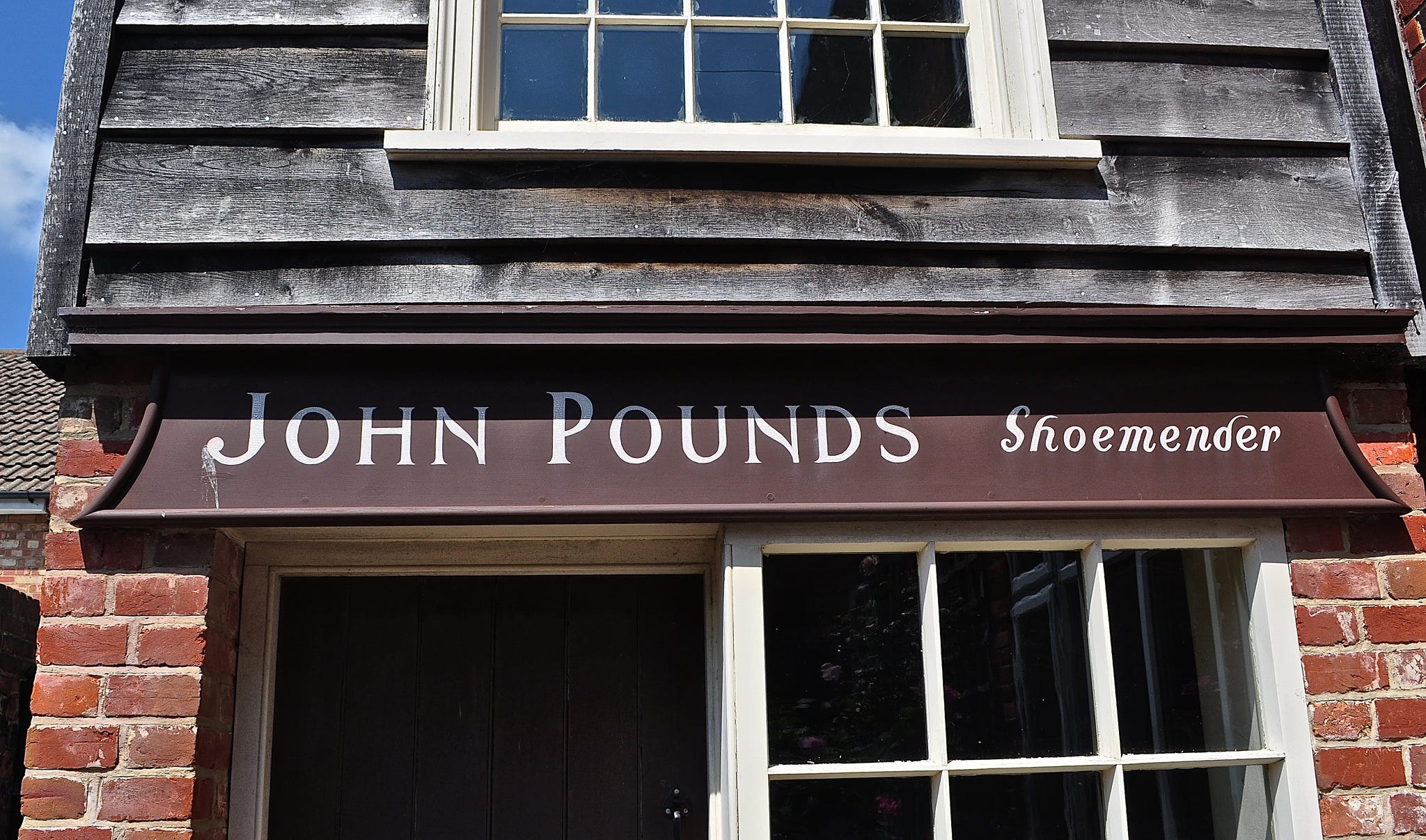
So, he learned to mend shoes because a man can do that sitting down. By 1803 he had a tiny place in St Mary Street: two rooms, one up, one down. The downstairs room, only 8ft wide, became the workshop and the house.
His brother was a sailor and had a son who was born with his two feet turned in on each other, making it difficult for him to walk. The family was poor and was struggling to raise the boy, so John took him in, despite his own issues. He called him Neffy. He made him special shoes and worked on the feet until the boy could walk. Then he taught him to read, because a boy who can walk needs a healthy mind.
John felt that one boy was not enough, so he asked a neighbour’s child in, then another, and eventually went looking for them on the street. Portsmouth was full of homeless children, so he wandered the streets looking for the ones everyone else stepped around.
“I wants they as nobody else cares for,” he told a visitor later.
He carried hot potatoes in his pocket, and when he saw a starved child on the street he would approach them and ask, “Will y’have a taty?” Sure enough, the child took it, then as he ate, he followed John in the hopes of getting another. “And as sure as he comes once, he comes again.”
That is how a household grows when you have no money and no title. You feed first. Then you teach.
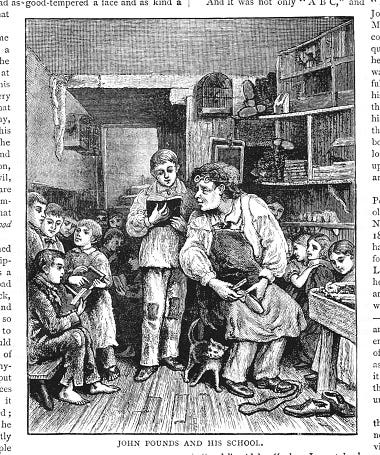
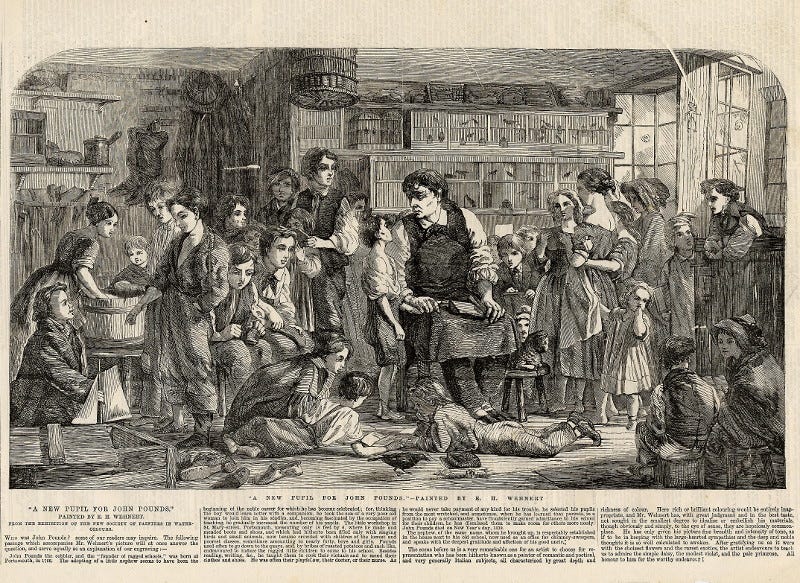
Soon, 30 or 40 of the children nobody else wanted were sitting in John’s downstairs room. Some on boxes, some on the floor, some perched outside the window. John sat in the middle with his tools in hand, working on shoes, while teaching a lesson. He taught reading from handbills and old school-books. He taught maths as far as a working man needed. He taught cooking, carpentry, and how to mend a shoe, because character without a skill can only get you so far. The older kids would help the younger ones. He also questioned them about everything - a hand, an ear, a flower. “The Book of Nature’s a Divine Book to larn ’em out of,” he said.
He would not keep them working for hours with nothing to keep them fresh. “I likes fun, and I likes work. A bit of fun makes work go light and easy.” He let the worst-off sleep.
Friends offered him money for the teaching. He refused it. He would, however, take a bundle of jackets for the children, but nothing for himself.
He wasn’t a pushover, though. If the boys of wealthier men showed up, men who could pay for schooling, he would send them home. He wanted to keep space for the boys that needed it most, the rough ones nobody else wanted.
He never married. The nephew and the street children were his family. Hundreds passed through that room over the years, and some learned enough to hold a decent job. And that was the point. Not an award for doing good. Not a name on a board. Just a boy who could read, count his wages, and not go crooked for lack of something better.
He died on New Year’s morning, 1839, suddenly, while waiting in a friend’s hall. He was seventy-two. He had got up that day expecting another day’s work. After he was gone, other men built similar tiny schools across Britain and said they had got the idea from the cobbler of Portsmouth. This would have surprised him. He didn’t plan to found a movement. He just had a shop, a nephew, and children who would otherwise have been left to the gutter without his help.
That is the gentlemanly part, if you strip it right down to the raw basics - a man who takes responsibility for the people around him. John Pounds had no estate to leave, so he left a legacy and a habit: the home is made of those whom you will not abandon.
So, gentlemen, you do not need to be rich to raise a family. You do not need to be rich to put a spine in a child. You just need a table, however small, a skill in your hands, and the decision that the street will not have them.
The rest is showing up every day with a potato in your pocket, knowledge to pass on, and a plan in your head.
Amazing. This needs shared.
Incredible story and an amazing man. What a heart for children.