


In 1905, the most powerful man in the world took a punch in the face and went quietly blind in one eye.
It happened in the White House. Not in a war. Not in the Dakota Badlands. In a sparring session, with gloves on, against a young artillery officer who was told to come at the President of the United States with everything he had.
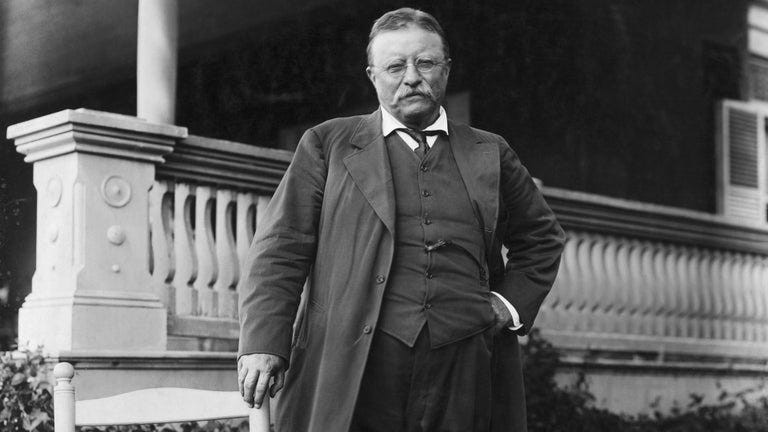
Theodore Roosevelt did not advertise the injury. He did not sack the man who threw the punch. He simply stopped boxing, kept the secret for years, and later shrugged it off in the only way that sounds like him.
“The last boxing I did was in Washington,” he said. “I boxed with my aides most of the time, but one day a young captain of artillery came along and broke some blood vessels in my left eye. I have never been able to see out of it since.”
Then came the line that showed who he really was:
“Fortunately, it was my left eye, but if it had been the right eye I should have been entirely unable to shoot.”
That is not just a gym story. That is a whole philosophy.
We have spent a long time pretending the gentleman and the warrior are different species. One holds the door. The other holds the line. One knows which fork to use. The other knows how to throw a punch. It is a lie, and always has been. The result is a lot of well-dressed men who freeze when something ugly happens in front of them.
A gentleman without the capacity for force is decorative.
A fighter without manners is just a thug.
The thing worth becoming is the man who could do harm, and chooses not to.
Roosevelt understood this. At Harvard he boxed and wrestled. “I did a good deal of boxing and wrestling,” he wrote later, “but never attained to the first rank in either, even at my own weight.” He kept doing it anyway. As governor. As president. Judo in the White House. Mats in the basement. Visiting wrestlers. A Japanese instructor. Swollen wrists, swollen toes, and a diary that listed every injury as if it were a prize.
There is an older English name for what he was practising.
In 1599, a gentleman called George Silver published a brilliant book, Paradoxes of Defence. He was sick of fashionable foreign fencing that looked elegant and got good men killed. He was not against teachers. He was against the theatre of it all.
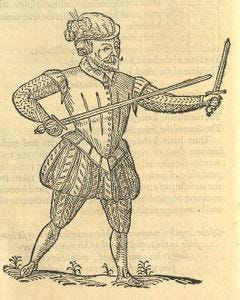
Of the art itself he wrote this:
“I speak not against Masters of Defence indeed, they are to be honoured, nor against the Science, it is noble, and in mine opinion to be preferred next to Divinity; for as Divinity preserveth the soul from hell and the devil, so doth this noble Science defend the body from wounds and slaughter.”
Then, because he was English and could not help himself, he listed the side effects. Training puts away aches, increases strength, sharpens the wits, expels melancholy, keeps a man in breath, puts him out of fear, and in danger makes him “bold, hardy and valiant.”
Silver called it a science of defence. The implication is that a civilised man expects trouble to arrive and does not outsource his own safety. He does not expect others to protect his loved ones. He deals with it, with deadly competence.
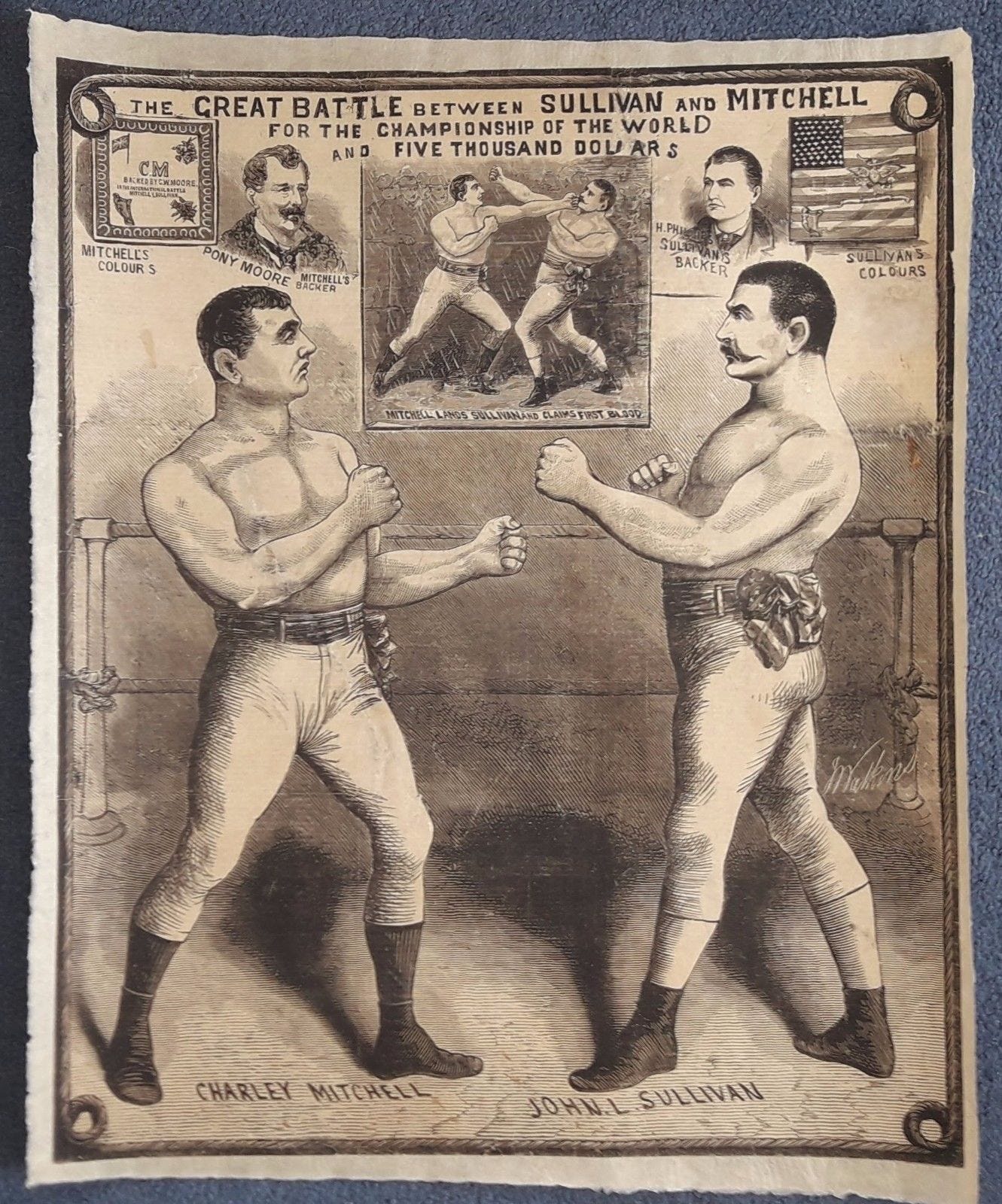
The Victorians knew it too, in their own way. Eugen Sandow, who did more than anyone to promote the trained body, wrote a sentence that should be nailed above every beginner’s class:
“He is gentle, and only uses his powers against his fellow men when called upon to do so in the defence of the oppressed and helpless. It is your weakling who is generally a bully and a tyrant.”
Read that again.
The bully is not the strong man. The bully is the man who has never been humbled on a mat and therefore has to prove himself in the street, the office, the comment section. Strength, properly acquired, tends to quiet people down. You have already found out what you are. You do not need a stranger to tell you.
Training is how you grow while the stakes are still low.
You learn to take a punch and stay focused. You learn that panic is not an option. You learn that most fights are over before they start if one man has put the work in and the other has not. You learn, if you train in a good gym, how to win, and how to lose.
I’ve been there myself. Judo when I was younger. Muay Thai and Boxing now. That training has improved me in every aspect of my life and has prepared me better than most for the ugly side of society.
That is why a gentleman trains.
Not so he can tell people he trains. Not so he can romanticise violence. Because peace is more convincing from a man who could have chosen otherwise. Because the old code never asked you to be harmless. It asked you to be dangerous and decent in the same skin.
Remember Roosevelt’s famous line.
“Speak softly and carry a big stick.”
People remember the stick. They sometimes forget the first part. The softness is the point. Anyone can bark. The rare thing is the quiet man whose quiet is a decision.
So no, the gentleman is not the opposite of the warrior.
He is what a warrior looks like when he has been civilised without being castrated.
The punch in the White House was an accident. The years of sparring that made the accident possible were not.
Train. Badly at first. Properly as soon as you can. Under someone who will not flatter you.
Then go back to being gentle.
It will mean more.
Carry on, gentlemen.
The line about strength making people quieter is the part that stuck with me most.
This is absolutely correct.